.webp)
Hiring manager interview training: what to cover and how to run it
Most hiring managers learned to interview by watching someone else do it badly. Here is what structured training covers - and why it sticks.

Why most hiring managers have never actually been trained
Somewhere between the job description going live and the calendar invite landing in a candidate's inbox, most organisations quietly skip a step. The hiring manager gets the brief, gets the questions (sometimes), and gets the room. What they rarely get is training in how to conduct the interview itself.
This is more common than it sounds. AIHR data suggests that the proportion of interviewers who have asked illegal questions sits at around 20 % - and 99 % of those who do receive training report it as necessary, which implies the majority never receive it at all. The modal preparation for a first-time interviewer is watching someone else do it at a previous company, then replicating the approach.
What passes for training in most organisations is a compliance briefing: here are the questions you cannot ask, sign here to confirm you understand, proceed. That is not without value - discrimination law exists for good reason - but it is not a skills programme. It tells a hiring manager what to avoid. It does not tell them how to consistently evaluate the candidates who walk through the door.
There is also a structural problem with any training that happens once. Research on why one-off training events fade quickly points to the forgetting curve: the sharpest drop in retention happens in the first 48 hours after a training session, and without reinforcement, most of the material is gone within a week. A single interview-skills workshop is a reasonable start. As a complete programme, it is a polite fiction.
So what does a training approach that actually changes interview quality look like? That starts with understanding what the research says training is supposed to achieve.
What the research says about interviewer training
The question of whether training actually improves interview quality has a reasonably clear answer, even if it is not the one most HR teams expect.
Huffcutt and Woehr (1999) conducted a meta-analysis across 120 interview validity studies, covering 18,158 individuals. Of the four interviewer-related factors they examined - training, standardisation, note-taking, and panel format - training had the strongest relationship with interview validity, at a corrected correlation of r = 0.41. Interviewers who were trained produced more valid assessments than those who were not, and this held even when the interview itself was not highly structured.
That last point matters. The same research found that structuring the interview (standardising questions, using anchored rating scales) had an even stronger relationship with validity, at r = 0.63. Training does not replace structure. But it does add incremental validity above and beyond structure alone - a semi-partial correlation of 0.16 in Huffcutt and Woehr's regression analysis, suggesting the two work together rather than substituting for each other.
McDaniel, Whetzel, Schmidt and Maurer (1994) reached a similar conclusion in a larger meta-analysis of 245 validity coefficients from 86,311 individuals. Structured interviews - situational and job-related - showed corrected validity up to 0.56 for job performance criteria, compared with substantially lower figures for unstructured formats. The mechanism is not mysterious: how structure approximately doubles prediction accuracy over unstructured interviews comes down to removing the variability that one interviewer-to-another inconsistency introduces.
Campion, Palmer and Campion (1997) identified 15 distinct components of interview structure in their comprehensive review of the research literature. Training appears under the evaluation standardisation cluster - alongside providing the same rating scales, giving identical instructions to all interviewers, and using statistical aggregation rather than consensus discussion. Their conclusion was that even partial implementation of structural components improves reliability. Training is not an optional extra on top of a structural programme; it is part of what makes a structural programme work.
The practical implication is that training and structure are not rival approaches. They are the same intervention seen from different angles - one focused on the interview format, the other on the person conducting it.

What interviewer bias training actually needs to do
Ask most HR leaders what their bias-reduction strategy looks like, and the answer is a workshop. A facilitator, a deck of cognitive bias definitions, perhaps a video about affinity bias, and a room of hiring managers who emerge with greater awareness and roughly identical behaviour. The research on this is not encouraging.
Gino and Coffman, writing in why awareness-raising alone fails to change hiring behaviour, found that consciousness-raising approaches can backfire. Sending the message that bias is involuntary and widespread may make it seem unavoidable rather than correctable. Awareness does not equal behaviour change. Training that stops at the level of "you probably have biases" has done nothing to alter the conditions under which those biases operate.
Bohnet (2016) makes the same point from a different direction. Unstructured interviews receive the highest perceived-effectiveness ratings from hiring managers, despite being among the worst predictors of actual job performance - a gap she describes as one of industrial and organisational psychology's great embarrassments. The University of Texas Medical School field study is the cleanest illustration: 50 initially rejected applicants, admitted by necessity after the class was expanded, performed identically to the 150 who had been accepted. Three-quarters of the initial ranking difference was attributable to unstructured interview impressions, not grades or measurable performance indicators.
Dana, Dawes and Peterson (2012) took this further. Their studies demonstrated two mechanisms that explain why unstructured interviews so reliably mislead. Sensemaking: interviewers construct coherent, confident narratives from whatever a candidate says, including random content. Dilution: adding non-diagnostic interview information to a decision weakens the predictive value of better data. In their experiments, participants made more accurate predictions about students they had not interviewed than about students they had. The interview, unstructured, was actively making things worse.
Effective bias training, then, is not primarily about self-knowledge. It is about redesigning the conditions under which judgment is made. Bohnet's practical recommendations follow directly: score each answer immediately after it is given, before moving to the next question; compare candidates question-by-question rather than end-to-end; ensure interviewers submit individual assessments before a group debrief, so early speakers do not anchor the room. These are procedural changes, not attitude changes. They work on biased and unbiased minds alike, because they reduce the space in which bias can operate.
What hiring manager training should cover: the core curriculum
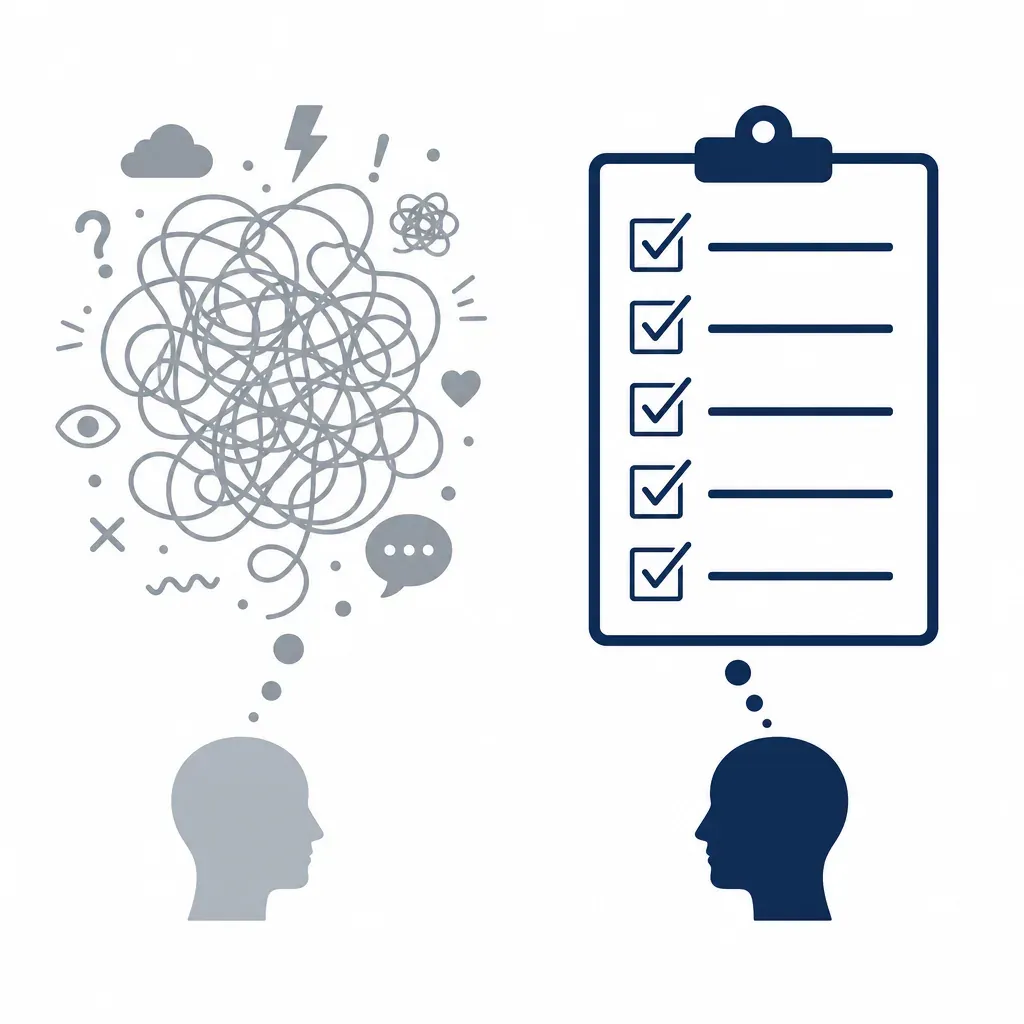
If a single workshop cannot do the whole job, and awareness-raising cannot substitute for procedural change, what should a well-designed training programme actually contain? There are five topics that consistently appear in the research and in effective practitioner programmes.
What structured interviewing is, and why it outperforms intuition. Training should begin here. Hiring managers who understand the evidence - not as a compliance exercise but as a genuine argument - implement structure with more discipline than those who have simply been handed a question list. The literature is accessible enough to share in summary: two or three numbers from the meta-analytic record, the medical school study, the sensemaking experiments. The goal is genuine conviction, not compliance.
How to build and use a scorecard. The scorecard is the practical artefact around which the rest of the interview process organises. A well-designed scorecard defines 3-5 competencies relevant to the role, each with anchored descriptions of what strong and weak evidence looks like. According to how scorecards built around 3-5 competencies anchor consistent evaluation, without anchored descriptions, scores drift between interviewers - one person's three is another person's five, and the aggregation produces noise rather than signal. Training should cover how to define competencies from a job analysis, how to write anchored rating examples, and how to score in the room rather than after.
Question types and how to use them. Behavioural questions (tell me about a time when...) and situational questions (imagine you faced this situation...) have different validity profiles and different appropriate uses. Training should cover both, including how to construct questions from the scorecard competencies rather than using a generic bank.
Legal compliance. Not the whole programme, but an inescapable component. Campion, Palmer and Campion (1997) noted that basing questions on a job analysis reduces both legal exposure and poor predictive validity at the same time - structured, job-relevant questions are harder to challenge legally and more useful evidentially. Training should teach the principle, not just a list of banned topics.
The scoring and debrief protocol. Huffcutt and Woehr (1999) found that evaluator standardisation - ensuring all interviewers receive the same instructions and use the same rating procedures - is a distinct structural component from question standardisation, and that both contribute to validity. Training should include how the debrief works: individual scores submitted before discussion, facilitator consolidation, structured comparison rather than open floor.
A word on what training should not cover: personality profiling from observation, body language interpretation, or the topics a comprehensive interview training programme must cover that focus on culture-fit intuitions. None of these have adequate predictive validity, and including them implicitly legitimises exactly the unstructured judgment that the rest of the programme is designed to replace.
How long should interview training take?
It is a reasonable question, and the honest answer is: less than most people assume for the initial event, and more than anyone budgets for the ongoing maintenance.
The forgetting curve research, as documented in how the forgetting curve undermines single-session interviewer training, puts the largest retention loss in the first 48 hours after any training event. A full-day workshop that happens once is not a poor use of time; it is simply not a programme. It is a spike of awareness followed by a slow return to the interviewer's prior habits, which tend to be quicker, warmer, and more intuitive than anything a training deck recommended.
Spaced repetition is the evidence-based alternative: short reinforcements at increasing intervals preserve material far better than front-loaded volume. This does not mean quarterly training events. It means embedding the practice into the hiring process itself.
For a small business, a workable structure looks like this: an initial session of two to three hours covering the core curriculum (what structured interviewing is, scorecard design, question types, scoring protocol); a 30-minute pre-role calibration before each new hire search, where the hiring manager and any interviewers review the scorecard, agree on what good looks like, and confirm the question set; and a post-interview debrief ritual of 20-30 minutes that reinforces the scoring discipline before any group discussion takes place. The total per-hire overhead is modest. Why regular reinforcement matters more than initial training volume is precisely this: regular, embedded touchpoints maintain interviewer calibration better than a single annual event.
The more useful question, then, is not "how long should the training take?" but "what triggers the next reinforcement?" A new role opens: calibration session. An interviewer joins the panel for the first time: a 30-minute brief. A hire is made and a year passes: revisit. Tying training to the hiring cycle rather than to the calendar makes it self-reinforcing in a way that a workshop sitting alone on the L&D plan never quite manages.
How to install it: the Structured Hiring Method
The research above describes what good interviewer training looks like. The gap most small businesses face is not understanding - it is implementation. They know structured hiring works. They do not have a method for installing it without either a six-month consultancy engagement or a dedicated HR team to build and maintain it internally.
HireSchool was designed for exactly that gap. The Structured Hiring Method is a self-guided digital programme - video content plus a learning management system - that lets a business codify its hiring process and train its hiring managers without external consultants. The buyer rolls it out themselves. HireSchool provides the curriculum, the materials, and the structure. The business does the work.
For the specific challenge this article has been describing - training hiring managers to interview well - the programme has three components that do the heavy lifting.
The Hiring Manager Blueprint trains hiring managers directly in how to plan an interview, build a scorecard against pre-set Leadership Values, and structure their preparation so that the interview itself follows a predictable, evaluable process. It addresses the planning gap that most untrained hiring managers carry into the room: they know what they want the candidate to be like, but they have not defined, in advance, what evidence of that would actually look like.
Evidence-Based Decisions and Behavioural Interviewing Training cover the mechanics of bias reduction described in section three. The emphasis is procedural: how to structure scoring, how to conduct a debrief that does not collapse into whoever spoke loudest, and how to anchor decisions in candidate evidence rather than interviewer impression. This is the part of structured hiring that most awareness-based programmes skip. It is also the part that produces the validity advantage the meta-analyses document.
Decision Management codifies what happens after the interview concludes. The debrief has a process. The decision has a standard - First Past the Post, meaning the standard is set in advance and the first candidate who meets it is hired. No indefinite shortlist management. No moving goalposts. No losing a strong candidate while the panel deliberates about whether someone slightly better might still appear.
To be clear about what the Structured Hiring Method is not: it is not a recruiting agency, not an applicant tracking system, and not a consultancy. There are no HireSchool staff embedded in the process. The business runs its own hiring; the programme provides the method.
For any business that has read this article and is working out where to start, the next step is straightforward: explore the Structured Hiring Method programme and see which modules map onto the specific gaps in how hiring managers are currently prepared.

Getting started without a full programme
Not every organisation is ready to implement a structured hiring method from scratch. That is a reasonable position, and it does not mean the only alternative is the status quo.
Blackburn (2006) studied how hiring managers decide whether to adopt structured selection instruments. The finding most relevant here: motivated reasoning research shows that managers are more likely to adopt structured interviews when they feel in control of the process, not when structure is presented as an external constraint applied to them. The framing matters. Training that positions a scorecard as a tool the manager now has - rather than a compliance requirement they must follow - meets less resistance and sticks better.
A practical starting point for any organisation: pick one active role. Sit with the hiring manager before the first interview and build a scorecard together - three to five competencies, brief anchored descriptions of strong and weak evidence for each. Agree on the question set. Then run the interviews and compare how the scorecard changed the debrief. That thirty-minute conversation before the first candidate arrives does more than a standalone training session, because it connects the theory to a live decision that the hiring manager actually cares about.
How starting with one high-priority role builds the case for a broader programme is consistent across practitioner accounts: a single well-documented example - a hire that was made more clearly, a borderline candidate whose scorecard made the decision defensible - is more persuasive internally than any argument about meta-analytic validity coefficients.
The minimum viable version of interviewer training, then, has three elements: a 30-minute pre-role briefing covering the scorecard and question set; individual scoring before the group debrief; and a debrief facilitated by one person who consolidates scores before open discussion. None of these require external resources. All of them reduce the specific failure modes that unstructured hiring produces.
The gap between "our hiring managers have a sense of what good looks like" and "our hiring managers use a consistent, scoreable method" does not close by itself over time. It closes when the process changes. Hiring manager training is not the finishing touch on a hiring system. It is the mechanism by which the system either works or does not.