.webp)
Interview questions for internal candidates: how to keep it fair
The questions, the scorecard, and the discipline that keep an internal interview fair when the manager already likes the candidate.

Why internal interviews fail in a specific way
Internal interviews fail in a way external interviews mostly do not. The hiring manager already has a story about the candidate. The conversation that follows usually confirms it. The role then goes to whoever feels safest in the room, which is rarely the same person as whoever can actually do the new job. None of this looks like a failure on the day. It looks like an easy decision.
The frustrating part is that the underlying instinct is not wrong. Internally promoted staff tend to outperform external hires for the same role and earn substantially less, with internally promoted staff outperforming external hires for their first two years on the evidence Bidwell gathered from a U.S. investment bank. Promoting internally is, on the numbers, a sound bet. The problem is not the bet; it is whether you can tell which of the people on your payroll is ready for the new role and which is being carried by their existing reputation.
This is where interview questions for internal candidates get harder, not easier. The familiar chat actively works against you. Dana, Dawes and Peterson (2012) showed two cognitive mechanisms that explain why. The first is dilution: when you give yourself a long unstructured conversation on top of the diagnostic information you already had, the extra detail weakens the prediction rather than sharpens it. The second is sensemaking: people are very good at constructing a coherent story about an interviewee even when the answers carry no signal at all. In one of their studies, interviewees secretly answered at random; the predictions made afterwards were no less confident than predictions made from honest answers. Confidence and accuracy in this context are barely related.
The rest of this article is the corrective. The questions that test capability for the new role rather than past performance in the old one. The scorecard that makes the comparison defensible. The quiet discipline that keeps the process fair when the candidate is already on payroll, the hiring manager already likes them, and everyone in the room would rather skip to the answer.
What "fair" actually means in an internal interview
Most fairness language in hiring is aspirational and slightly embarrassing in retrospect. It survives one decision and not the next. A more useful definition is operational: a fair internal interview is one in which the candidate would still get the same score from a different interviewer who likes them less. If that is not true, you have not run an interview, you have run a reunion.
Three biases reliably corrode internal job interview questions in particular. The first is the halo effect, where one strength bleeds into ratings on unrelated capabilities. The candidate is a strong communicator, therefore they will obviously be good at running a budget. The second is similar-to-me bias, where the manager favours the candidate whose career resembles their own. The third is confirmation bias, where the questions drift towards the answers the interviewer was already expecting. Levashina et al. (2013), reviewing two decades of structured-interview research, treats these as the dominant failure modes for unstructured selection, and they get worse, not better, when the interviewer already has an opinion about the candidate.
SHRM's recent piece on the same territory frames it as the unconscious tendency to replicate past success - assuming what worked before will work again, and rating accordingly. That is a precise description of what happens to an internal candidate. The manager has watched them succeed in their current role. The interview becomes an exercise in finding evidence that the new role will look like the old one. It will not.

The fix is not "try to be more objective". Goodwill cannot do this work; the biases operate below the level of intent. The fix is procedural, and Bohnet (2016) sets out the components plainly. Same questions, asked in the same order, of every candidate. Anchored ratings on a structured interview scorecard, scored independently before the panel discusses anything. Comparison done horizontally - candidate by capability rather than candidate by candidate. Each piece of structure does a small share of the work; together they make it harder for the existing impression to drive the score.
This is not about treating the internal candidate as if you have never met them. That would be silly, and they would notice. It is about making sure that the part of the decision that concerns the new role is decided by what they say in the interview rather than by what you already feel about them. Familiarity is allowed to inform; it is not allowed to vote.
A short answer on the 3 Cs and 5 Cs of interviewing
Two questions reliably surface around interview design and they are worth answering directly before going further. What are the 3 Cs of interviewing, and what are the 5 Cs.
The 3 Cs are usually given as character, competence, chemistry as a hiring shortlist. The candidate is reliable, can do the job, and gets on with the team. The 5 Cs add two more, with the longer five-C list adds communication and confidence sitting alongside the original three. Different sources rearrange them - credibility sometimes appears, clarity sometimes appears - but the spirit is the same.
The honest thing to say about both lists is that they are mnemonics, not methodologies. They tell you what to keep an eye on. They do not tell you which questions to ask, how to anchor your ratings, how to keep the halo effect off your scorecard, or how to compare two internal candidates fairly when one of them already reports to you. A list of nice qualities is not a process. A process is a process.
This article uses competence - capability for the new role, specifically - as the central frame, because that is the dimension internal interviews most often skip. Character, chemistry, communication and the rest still matter, and they show up later in the scorecard alongside everything else. They do not earn their own categories on the day, because the question that decides the hire is whether the candidate can do the new role. The other Cs are inputs to that question, not answers to it.
The questions that actually test capability for the new role
The catalogue you find on most HR blogs is a question bank. Useful as a starting point, light on logic. The standard catalogue of internal interview questions tends to spread across motivation, leadership, behaviour, collaboration, achievements and scenarios, then leaves the hiring manager to assemble something coherent on the morning of the interview. Internal promotion interview questions deserve a tighter brief than that. Group them around four buckets that map to the new role, not the old one.
Capability for the new role's hardest task. "Walk me through the most complex piece of work you would expect to land in your first month - what is the first thing you do, and what would you need from us?" "Tell me about a time you were responsible for an outcome you had no formal authority over." "What is the part of this role you are least confident about, and what do you need to close the gap?" These are tough interview questions for internal candidates because they cannot be answered from existing reputation. They require the candidate to project themselves into the new role and show their working.
Transition from old role to new. "Who on your current team would you find it hardest to leave, and why?" "Three months in, your old manager calls and says the handover is failing - what is going wrong, and what do you do?" "What would you stop doing that you currently do, and what would you keep doing for too long if no one stopped you?" Internal candidates underweight transition cost. They have lived in the old role for years and underestimate how much of their current effectiveness is portable, and how much is incumbency.
Judgement under unfamiliar pressure. "Describe a decision you made recently where you knew at the time that reasonable people would disagree." "Tell me about a time you changed your mind on something important in the last year - what changed it?" Capability for senior roles is mostly judgement, and judgement is best surfaced by asking for examples where the right answer was not obvious.
Motivation and what success looks like at 90 days. "Why this role, now?" "What does success look like at 90 days, and how would your new team know you are on track?" "What would make you regret taking this role?" Internal candidates often answer the motivation question with their career narrative. Push for what specifically about this role at this moment.

Two practical notes. First, supervisor interview questions for internal candidates almost always sit in the transition bucket, and the sharpest one is "name a peer you would now be managing - what is the first conversation you would have with them, and what would you not say?" That single question separates candidates who have thought about the move from candidates who have rehearsed the move. Second, what makes a question tough for an internal candidate is that it forces them off the script of their existing reputation. Lever's comparative discipline against external candidates applies here too - if the question would not work on someone you had never met, it is not testing the new role, it is testing whether they can confirm what you already think.
Follow up on every answer. "What specifically did you do?" "What did the other person say next?" "What would you do differently if it happened again on Monday?" Without follow-ups, answers drift into general competence claims that lean on the manager's existing impression rather than the evidence in the room.
Score it, not feel it: the internal-candidate scorecard
A scorecard is, in plain terms, a one-page list of capabilities with anchored ratings. Each capability the new role demands sits on its own line. Each line is scored on a five-point scale where every level has a worked example: 1 is below bar with examples drawn from the role itself, 3 is at bar with examples, 5 is above bar with examples. Without anchors the scale is decoration; with anchors it is a referee.
Anchored examples kill the most common failure mode in internal interviews, which is "they are a 4 because everyone likes them". Take scope of judgement. Anchor 1 might read "decisions inside their own task". Anchor 3 might read "decisions across their team". Anchor 5 might read "decisions that bind other teams and reset their plans". A hiring manager who wants to give the internal candidate a 5 now has to say what binding decision the candidate has actually made, in front of a scorecard that says what a 5 looks like. The conversation moves from impression to evidence in one step.
The single highest-leverage discipline is also the one most often skipped for internal candidates. Score before discussion, not after. Each interviewer commits their numbers and the evidence that justifies them on paper before the panel debrief. Campion, Palmer and Campion (1997) treat this as a core component of structure in their fifteen-component framework, alongside same questions, anchored ratings, and trained interviewers. Skipping it is tempting for internal candidates because the panel feels they already know the person. They do not, and this is the trap. They know the old role; they have not yet seen evidence on the new one.
Compare horizontally rather than vertically. Read every interviewer's score on capability one across all candidates, including any external candidates in the same process, before moving to capability two. Bohnet (2016) is direct on the point: comparing answers candidate by candidate lets stereotypes and existing impressions do most of the work, while comparing capability by capability suppresses that effect because the rater is now thinking about the capability rather than about the person. For internal candidates this discipline matters twice over. It pulls the scorecard back to the role, and it stops the existing relationship from quietly reweighting every line.
Set the bar before the interview. The bar is "can they do the new role" and not "are they better than the other candidates we currently have on offer". A weak field is not a reason to lower the bar; it is a reason to keep looking. An internal candidate who clears the bar but trails an external candidate is still a hire worth making, often, given what we know about ramp time. An internal candidate who does not clear the bar is a no, and a structured interview scorecard is what gives the hiring manager something to point at on the day.
How to install this without a consultant
By this point the case is on the table. The failure mode is familiarity replacing evidence. The questions test the new role rather than the old one. The scorecard mechanic forces the decision into the open. The remaining question is operational, and it is the question that quietly kills most attempts to fix internal hiring: how do you install this so that every hiring manager in the business runs the same interview, the same way, without bringing in a consultant for a week or writing a forty-page handbook nobody reads?
HireSchool exists for this. The Structured Hiring Method is a self-guided digital programme that codifies a small business's hiring process - interview flow, capabilities tested, candidate assessment, and decision mechanics - and delivers it through video content sat on top of a learning management system. Every interviewer in the business completes the same modules, so internal interviews and external interviews share one rubric and one structured interview scorecard. There is no live training calendar to coordinate, no consultant fees stacking up per role, and no situation where the senior manager who took the training six months ago is the only person who remembers how the scorecard works.
The components most relevant to the internal-candidate problem are codified scorecards, behavioural interviewing training, and decision management. Codified scorecards mean every role in the business is described in the same shape, with anchored capabilities and a defined bar. Behavioural interviewing training means hiring managers learn how to ask follow-up questions that surface evidence rather than narrative, which is exactly the discipline internal interviews skip. Decision management means the panel debrief follows a standard sequence - independent scores in first, discussion second, decision against the bar third - which is the only reliable defence against existing impressions taking over the room. The reader who has read this far will recognise that these are the same disciplines the article has been arguing for; the product is the curriculum that teaches them.
What HireSchool is not, briefly, because it saves the questions later. Not consultancy. Not an applicant tracking system. Not a recruiting agency. Not a generic LMS with hiring content bolted on. The product is the method itself rendered as the lessons your team actually completes before they sit in their next interview.
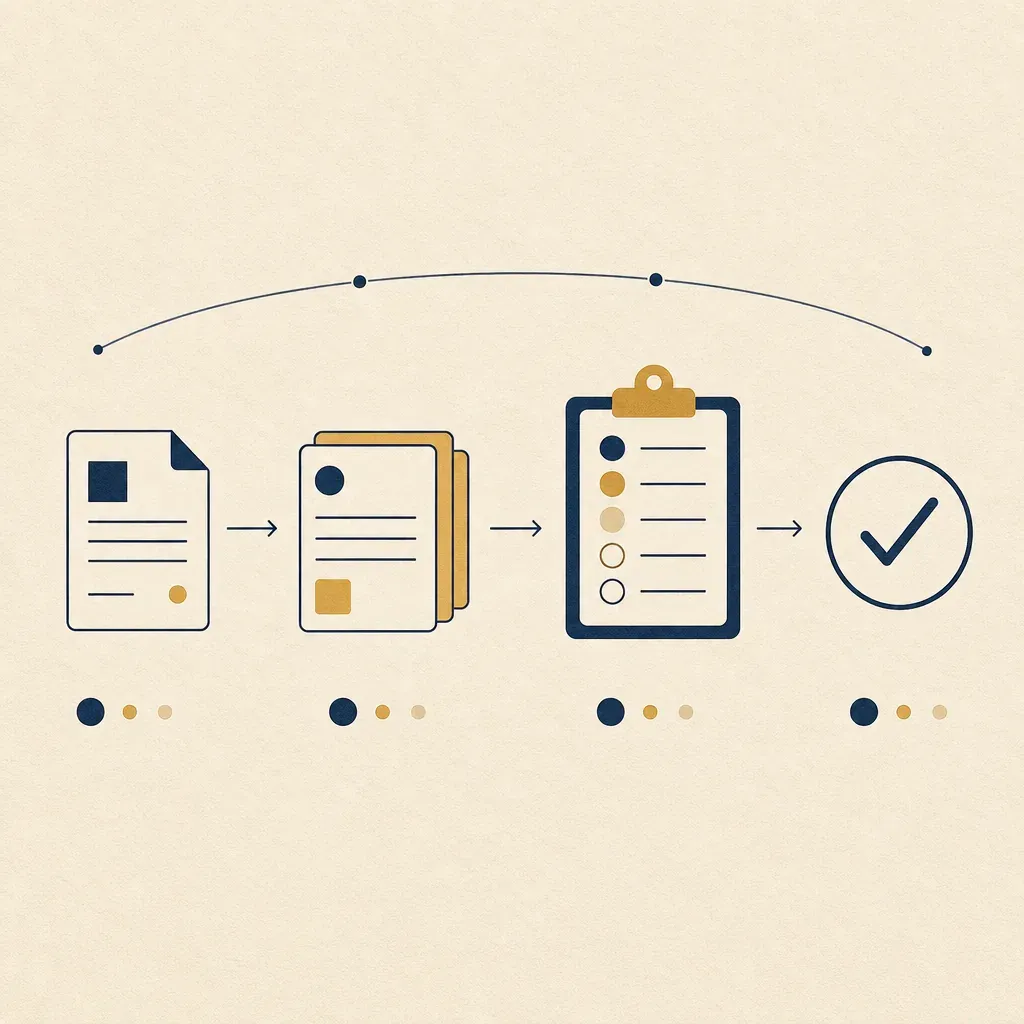
The reader audience for this is recognisable. The team is small enough that internal interviews happen rarely, and large enough that the cost of getting one wrong is high. The founder, the head of people, or the hiring manager who has read this article because there is an internal candidate on the calendar next week and they would like the process to hold up under examination. The right next step is to explore the Structured Hiring Method programme and decide whether the kit fits the team. The page describes the modules, the format and the price; the article you are reading describes the method behind them.
One last thing worth saying plainly. Installing structured interviewing is not a transformation project. It is a small set of habits delivered through a programme the team can complete in their existing week. The work happens once, and then every internal candidate after that gets the same fair process. That is the trade the rest of this article has been making the case for; this is the way to actually do it.
A short closing on what changes when you do this
The change, when it lands, is small and quiet. The hiring manager still likes the internal candidate. The internal candidate still has the trust of their team. What changes is that everyone leaves the room with the same answer to the same question: can this person do the new role, on the evidence in front of us, against the bar we set before we started. The conversation in the corridor afterwards is shorter, because there is less to relitigate.
The trade-off is honest. A structured interview is slightly stiffer in the moment than a friendly chat with someone you already know, and the candidate will notice. The payoff is on both sides of the decision. When the answer is no, the candidate gets feedback they can act on rather than a vague "this time it wasn't quite right", which is the version that quietly damages internal trust. When the answer is yes, the new manager and the new team know what they are getting, because the evidence sits on a scorecard rather than in the room with whoever was there on the day.
One thing to do this week. Pick the next internal interview on your calendar, write the four-bucket question set the day before, draft the scorecard with anchored ratings on a single page, and score it before the panel debriefs. The first one will feel slightly awkward. The fourth one will feel like the way you should have been doing this all along.