.webp)
How to reduce time to hire: metrics, bottlenecks, and fixes
How to measure time to hire correctly, find the bottlenecks, and fix them without trading quality for speed.

Why slow hiring costs more than the vacancy
The vacancy has a cost everyone can see: work not done, projects delayed, colleagues covering the gap. The more expensive cost is invisible - it is the hire you never made, the candidate who accepted a faster offer while your process was still in round two. The top 10 per cent of candidates are off the market within 10 days according to Dr John Sullivan, who has spent two decades documenting the business damage of slow hiring. That window is not a negotiating tactic; it is simply how competitive labour markets work.
The Glassdoor data reported by CFS Staffing puts a sharper number on it: 58 per cent of job seekers lose interest after two weeks. If your time to hire is six weeks - a common figure in technology and financial services - you have already lost more than half your starting field. What remains is a self-selected pool of people either desperate for work or willing to wait indefinitely, which is rarely the profile you advertised for.
There is also a salary effect that rarely appears in the post-mortem. Sullivan documents salary increases of up to 25 per cent above initial offers for candidates who attract multiple bids during an extended process. Speed is, in this sense, a negotiating asset. First to offer, first to close - and at a lower price.
The instinctive response to a slow hiring process is more interviews: if we are going to decide carefully, we should gather more evidence. In practice, this extends the timeline without improving the hire, because most of those additional rounds are unstructured conversations that add time but not signal. The solution is not to interview less; it is to make each round more informative. The rest of this article explains how, starting with the question of what you are actually measuring.
Time to hire vs time to fill: measuring the right thing
Most discussions of hiring speed conflate two metrics that measure entirely different things. Getting them confused is how companies end up improving a number that has no connection to their actual problem.
Time to hire is the number of days between a candidate entering your process (typically the application date) and the date they accept your offer. Formula: offer acceptance date minus application date. It measures the candidate's experience of your process - the part visible from the outside.
Time to fill runs further back. It measures the number of days from job requisition approval to offer acceptance: offer acceptance date minus requisition approval date. This captures everything internal to the organisation - the approvals, the job description rewrites, the budget sign-offs - before a single candidate has appeared.
The distinction between what each metric actually measures determines where you look for the bottleneck. A long time to fill but short time to hire suggests internal process delays before the role is even posted. A short time to fill but long time to hire suggests the candidate engagement side - screening, scheduling, or post-interview deliberation.
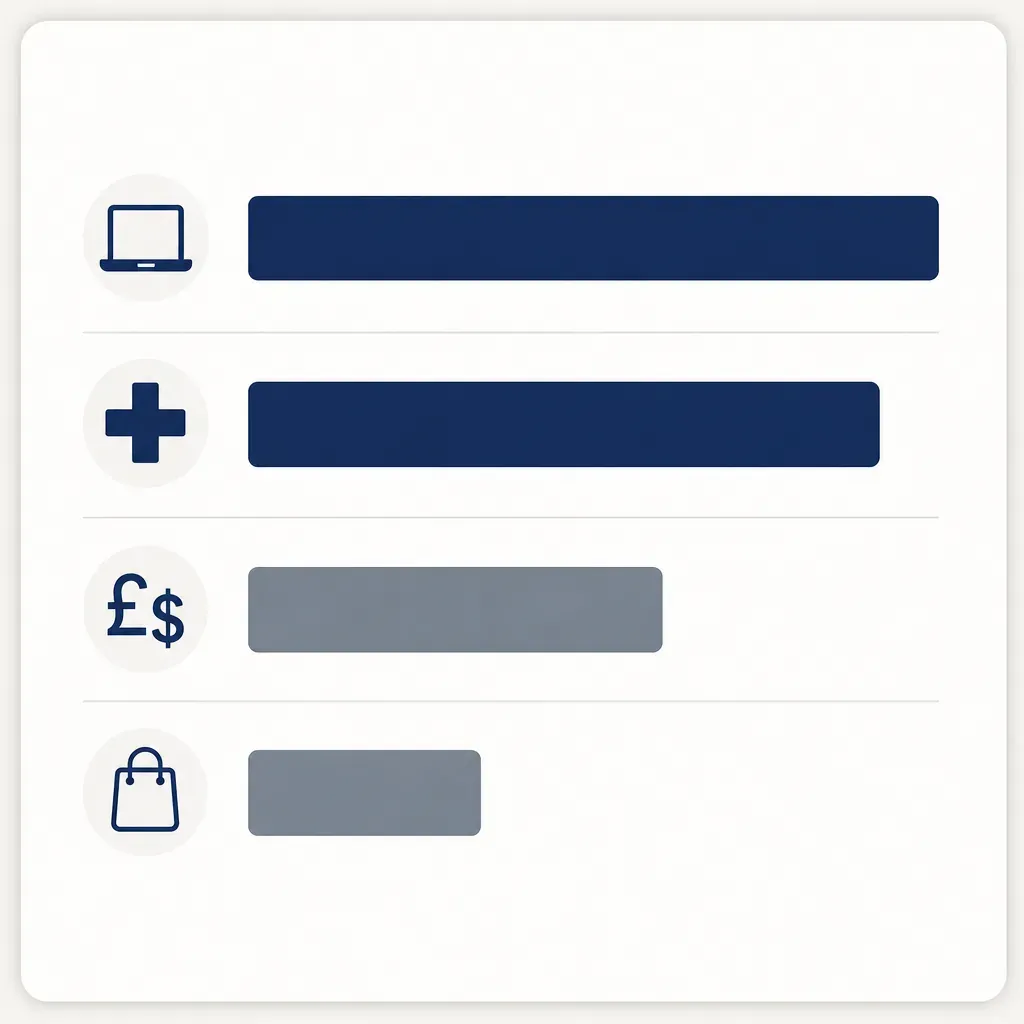
The benchmarks are worth knowing. SHRM's 2022 data puts average time to fill at 54 days across organisations. SHRM's average of 24 days from screening to offer acceptance is the candidate-side number that most approximates time to hire. Industry variation is considerable: healthcare averages 49 days, financial services 44.7 days, technology 45-65 days, retail and hospitality 20-30 days. What counts as competitive depends heavily on which market you are hiring in.
Tracking both metrics matters. A business that only watches time to fill misses the candidate experience problem entirely; a business that only watches time to hire misses the internal delay that consumes weeks before the process even starts. The two together give you a complete picture of where time is actually going.

Where the delay actually lives: a bottleneck map
Improving time to hire without diagnosing which stage is slow is the hiring equivalent of taking a painkiller and hoping the tooth sorts itself out. The problem is still there; you have just made it quieter. There are four zones where delay reliably accumulates.
Pre-posting delays are the invisible ones. Requisition approval chains, budget sign-offs, and repeated job description revisions can consume two to four weeks before a candidate ever sees the role. These are time-to-fill problems, not time-to-hire problems, but they feel identical from the outside: nothing is moving. They are best addressed at the process-design level - defined approval chains, pre-approved salary bands, templated job descriptions that need minor editing rather than a complete rewrite.
Screening bottlenecks appear when application volumes are high and the filtering criteria are vague. Without a clear picture of what good looks like, every CV becomes a subjective judgement, and subjective judgements take longer and produce less consistent results than criteria-based screening.
Interview scheduling is - contrary to how it feels - the single biggest practical bottleneck in most processes. A single unavailable interviewer cascading into weeks of delay is not an edge case; it is the normal experience when scheduling is handled reactively. One postponement in round one pushes every subsequent round back. The cascading effect is compounded further when multiple interviewers are involved: the probability that at least one person is unavailable at any given time is close to certain.
Post-interview delay is the most underestimated of the four. The interview has happened, so it feels like progress - but the clock is still running. Hiring managers who take two or three days to submit their assessment, debrief meetings that never find a slot, panels that leave deliberation until someone loses patience: all of this is invisible from the outside and entirely avoidable.
Rozario, Venkatraman and Abbas (2019) found statistically significant evidence (p = 0.005) that hiring members who followed a structured interview process with a standard set of questions were less likely to request improvements to their hiring process than those who did not. The organised process does not just improve the decision quality; it reduces the friction that causes delay after the interview is over.

Five fixes that actually move the number
Each of the four bottleneck zones has a corresponding fix. Most require upfront investment of two to four hours per role; all of them pay back across every subsequent hire.
Fix 1: agree the ideal candidate profile before the job goes live. Pre-defining what "good" looks like - specific behaviours, competencies, and minimum standards - prevents the most common form of post-interview delay: the moment when everyone involved realises they were each hiring for a slightly different person. Writing the scorecard before the first CV arrives is not pedantry; it is the thing that makes the debrief fast.
Fix 2: reduce rounds by making each round more informative. A structured interview - standardised questions, standardised scoring, reviewers who complete their assessment independently before discussing - produces substantially higher predictive validity per round than additional unstructured conversations. Campion, Palmer and Campion (1997) documented corrected validity correlations of .35-.62 for structured interviews versus .14-.33 for unstructured, across multiple meta-analyses. Levashina, Hartwell, Morgeson and Campion (2013) confirmed this finding across twelve subsequent meta-analyses. When a single structured interview round tells you more than two unstructured ones, the case for an extra round weakens considerably.
Fix 3: build a scorecard and use it before the debrief. A scorecard completed independently before discussion means the debrief compares evidence rather than forming opinions in the room. Structured interviews enable quicker decision-making through clear evaluation guidelines - the mechanism is simple: when each interviewer has already rated the candidate before they sit down together, the conversation is shorter, sharper, and less susceptible to whoever speaks loudest.
Fix 4: set a follow-up hiring process with a deadline per stage. Define maximum turnaround times explicitly: 48 hours for CV screening decisions, five business days for scheduling a first interview, 24 hours for post-interview scorecard submission. Without these, each stage expands to fill the time available - which is whatever the busiest person in the panel decides is acceptable. In practice, "I'll get to it this week" translates to Thursday at best.
Fix 5: solve the scheduling problem structurally. Rather than scheduling each interview reactively through back-and-forth negotiation, hiring managers block interview slots in advance - a set of pre-cleared windows each week - and candidates choose from those slots. One structural decision, compounding across every hire. This is especially effective for roles that hire repeatedly: the overhead of scheduling drops close to zero once the calendar template exists.
The downstream effect on offer acceptance rates is measurable. Offer acceptance rates averaging 69.3 per cent industry-wide reflect, in part, the candidate experience of a process that moves too slowly. When competing offers arrive before yours, the best response - increasing your offer - was also the preventable one.
The quality trap: when faster means worse
There is a legitimate objection to reducing time to hire: that speed and quality trade off against each other, and a business that rushes its hiring will get the hires it deserves. The objection deserves a direct answer, because in one version of the world it is entirely correct.
If reducing time to hire means shortening assessment - fewer questions, shallower evaluation, a gut-feel shortlist because the structured process would take longer - then yes, speed degrades quality. The right response to this version is not to accept slower hiring; it is to recognise that the structured process is faster, not slower.
TRG Talent's "Interview Addiction" report (2016) documented what happens when organisations double down on interviews as their primary assessment tool without structuring them: most such interviews fail to predict performance, and adding rounds multiplies cost without multiplying signal. "Interviews are a terrible predictor of performance," in Laszlo Bock's formulation from his time at Google. The issue is not interview volume; it is whether the interviews are designed to distinguish between candidates or merely to give the panel a chance to form an impression.
Gupta and Yadav (2023) found that employees hired through rigorous structured interviews achieved 22 per cent higher performance against goals over their first 12 months, compared to those hired through conventional unstructured processes. The regression analysis showed a structured interview score beta of 0.31 for productivity and 0.42 for first-year retention. The risk of rushing the hiring process at the expense of assessment quality is real - but the solution is not to avoid structured hiring; it is to build an assessment process that is both rigorous and fast, rather than choosing between them.
The practical argument is simple enough. A bad hire reopens a position. A position that reopens restarts the clock and doubles the cumulative time-to-hire. The worst case for time to hire is not a slow process; it is a fast bad one.
How to install a hiring process that stays fast
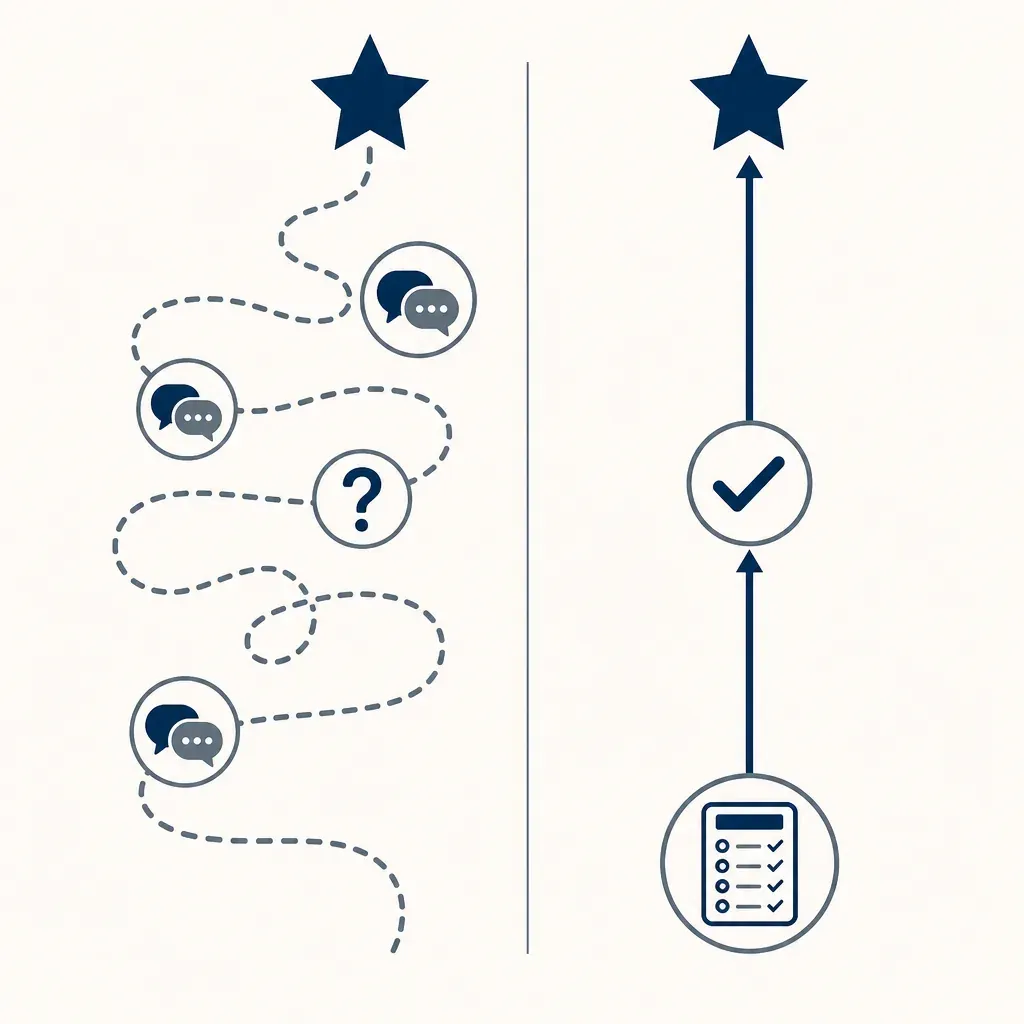
The five fixes in the previous section are individually useful. Applied once to a single role, each will probably shorten that hire. The difficulty is that a process reliant on individual hiring managers remembering to use a scorecard, block calendar time in advance, and submit feedback within 24 hours is not a process - it is an aspiration. Each manager will implement it differently, every new hire starts from scratch, and the gains disappear the moment someone is busy.
Scur and colleagues (2019) found that firms with structured management practices achieved compounding improvements in recruitment quality and retention - the effect was not a one-off uplift but a sustained operational advantage. The mechanism is the same one that applies to any repeatable process: when the method is codified and embedded, the people operating it do not have to remember it from first principles each time.
That is the problem a systematic hiring method solves. Not the motivation to hire well - most hiring managers want to do that - but the infrastructure that makes hiring well the path of least resistance rather than the heroic effort.
The Structured Hiring Method from HireSchool is a self-guided digital programme built to do exactly this. It is not a recruitment agency - HireSchool does not source candidates. It is not an applicant tracking system, and it is not a consultancy engagement with an embedded team. It is a method businesses purchase access to and roll out themselves, supported by video content and a learning management system that lets every hiring manager on the team learn the same process and track their own progress through it.
The components most directly relevant to reducing time to hire are worth naming specifically. The Role Hiring Process Flow standardises every stage across roles and teams, so the scheduling problem is solved once at the process level rather than reinvented by every hiring manager every time. The scorecard and behavioural interviewing training makes each interview round more informative - which is what allows two rounds to replace four, and a 25-day time to hire to replace a 45-day one, without reducing quality. The Decision Management module provides a structured debrief process that prevents post-interview indecision from sitting on the clock for days while the panel procrastinates; and the First Past the Post standard means the bar is set before the process starts rather than recalibrated after every interview.
First Past the Post is worth a sentence on its own. It means the hiring standard is defined in advance. The offer goes to the first candidate who meets it. There is no deliberating while a stronger candidate might still appear, no moving goalposts to accommodate a panel that fell in love with a candidate who does not quite fit, and no losing strong candidates to a faster competitor while the debrief runs for a third week.
The programme is designed for small businesses and scale-ups - the kind of company that cannot justify a bespoke hiring-transformation engagement but is producing, quietly, a mess of inconsistent decisions as it grows past fifty people. To see how the components fit together and whether the method addresses your specific hiring bottlenecks, explore the Structured Hiring Method programme at hire.school.
What a healthy time-to-hire number actually looks like
Before measuring improvement, you need a baseline, and a baseline requires knowing what the industry considers normal. The answer depends, predictably, on which industry you are in.
Industry-level time-to-hire benchmarks by sector show considerable variation: technology roles average 45-65 days, healthcare 49 days overall (with specialist clinical roles running considerably longer), financial services 44.7 days, retail and hospitality 20-30 days. These are central tendency figures - the fastest hirers in each sector are doing considerably better.
A useful target is not the sector average but a figure 20-30 per cent below it. If your industry averages 44 days and you are currently at 60, the ambition is not 44; it is 35. Matching the median means competing with whoever else is at median speed. Beating it means reliably making offers before the competition does.
The two-metric approach reinforces this framing. Track time to fill separately from time to hire, and measure against your own prior baseline rather than a published benchmark. A reduction in time to fill that does not move time to hire tells you the internal delays have improved but the candidate engagement side has not. Both numbers moving together tells you the whole process has changed.
The broader point the article has been building towards: a fast hiring process and a high-quality one are not competing outcomes. They describe the same well-designed process. Speed without structure is just urgency; structure without urgency produces the 54-day average. The organisations below the benchmark are not moving faster despite their standards - they are moving faster because of them.